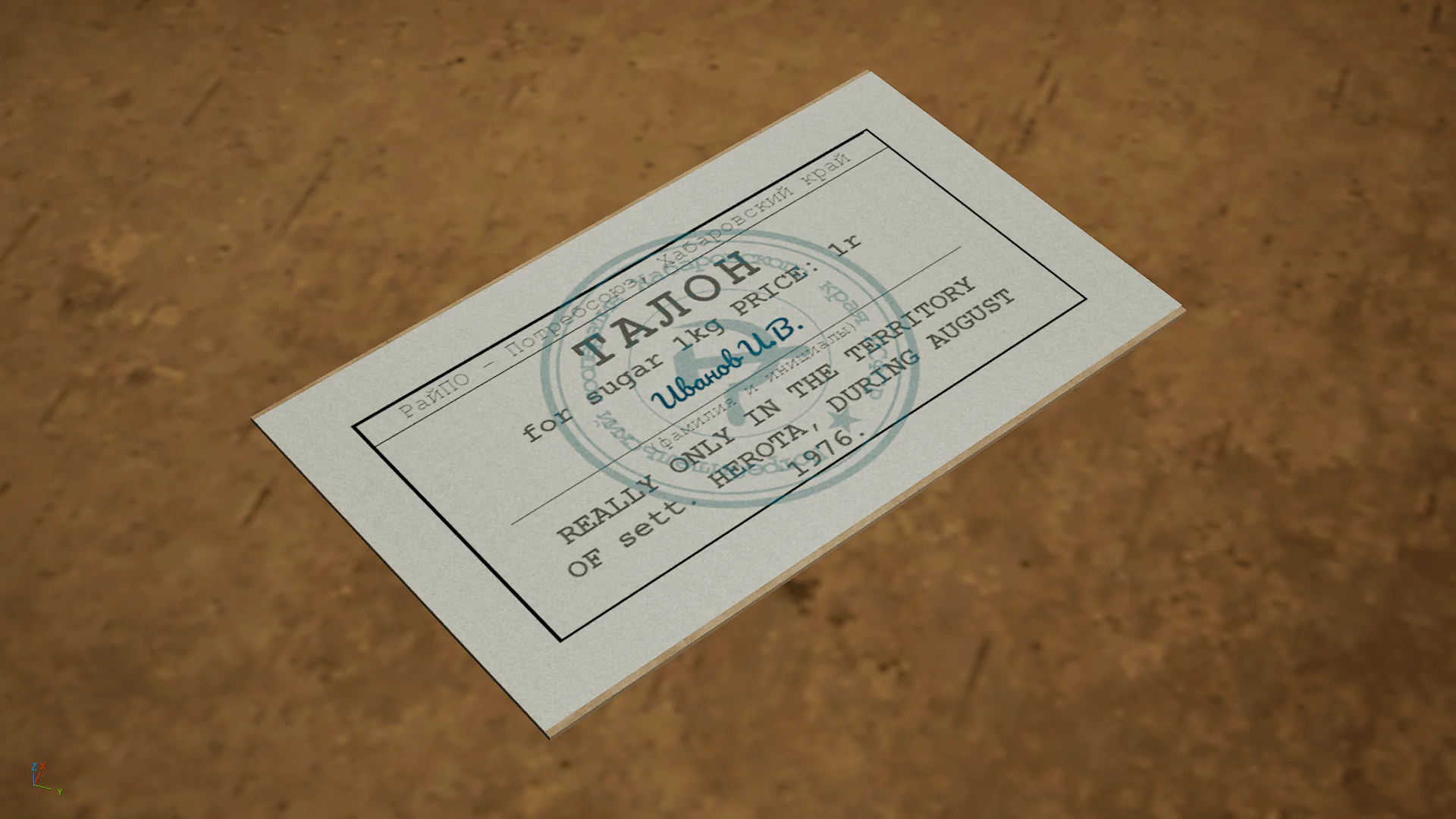
In Selsoviet, selling goods is only half the job.
Before handing anything over the counter, you’ll need to verify documents, check ration coupons, and make sure every purchase is backed by the proper paperwork.
Ration Coupons
Every ration coupon contains multiple details that must be carefully verified:
- Official stamp
- Full name
- Settlement where the coupon was issued
- Validity period
If any of these don’t match, the coupon must be rejected.
Forgery isn’t uncommon in Herota. The authorities may eventually deal with fraud—but not before the statute of limitations has practically expired.
Until then, maintaining order is your responsibility. Sometimes people simply accept your refusal. Sometimes… they don’t.
Like everything else in the game, our ration coupons are based on authentic Soviet designs from the 1970s. There was no single nationwide template—every region issued its own version. After researching numerous historical examples, we created a design that feels both authentic and believable for Herota.
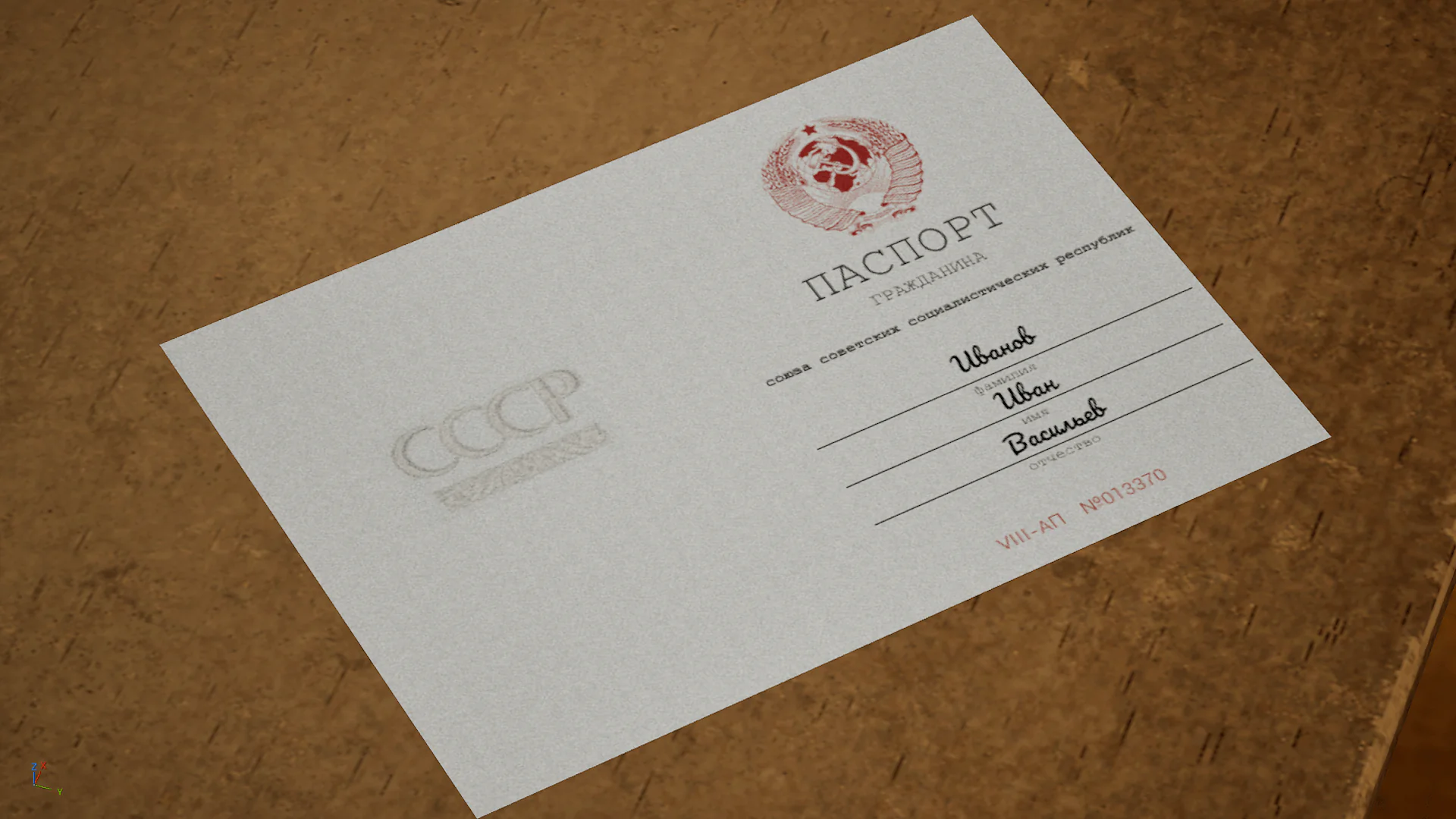
Passport
Possessing a passport in the Soviet Union wasn’t always taken for granted.
Until August 28, 1974, millions of Soviet citizens—especially those living in rural areas—didn’t have one. Passports were primarily issued to city residents, military personnel, Communist Party members, and other privileged groups.
Without a passport, moving to a city or freely accessing many parts of Soviet society was nearly impossible. Most rural citizens remained tied to their villages unless local authorities granted special permission to leave.
Although Selsoviet takes place in 1976, the passport reform had only just begun. Many residents of Herota still don’t have passports.
Note: The historical information about the Soviet passport reform appears only in the Russian version of the wiki page.
In-game, passports are usually carried by officials, Party members, and other respected members of society. Their appearance often reflects their social status long before they even speak.
The passport itself is recreated from genuine Soviet passports of the 1970s, including authentic numbering conventions and regional registration codes.
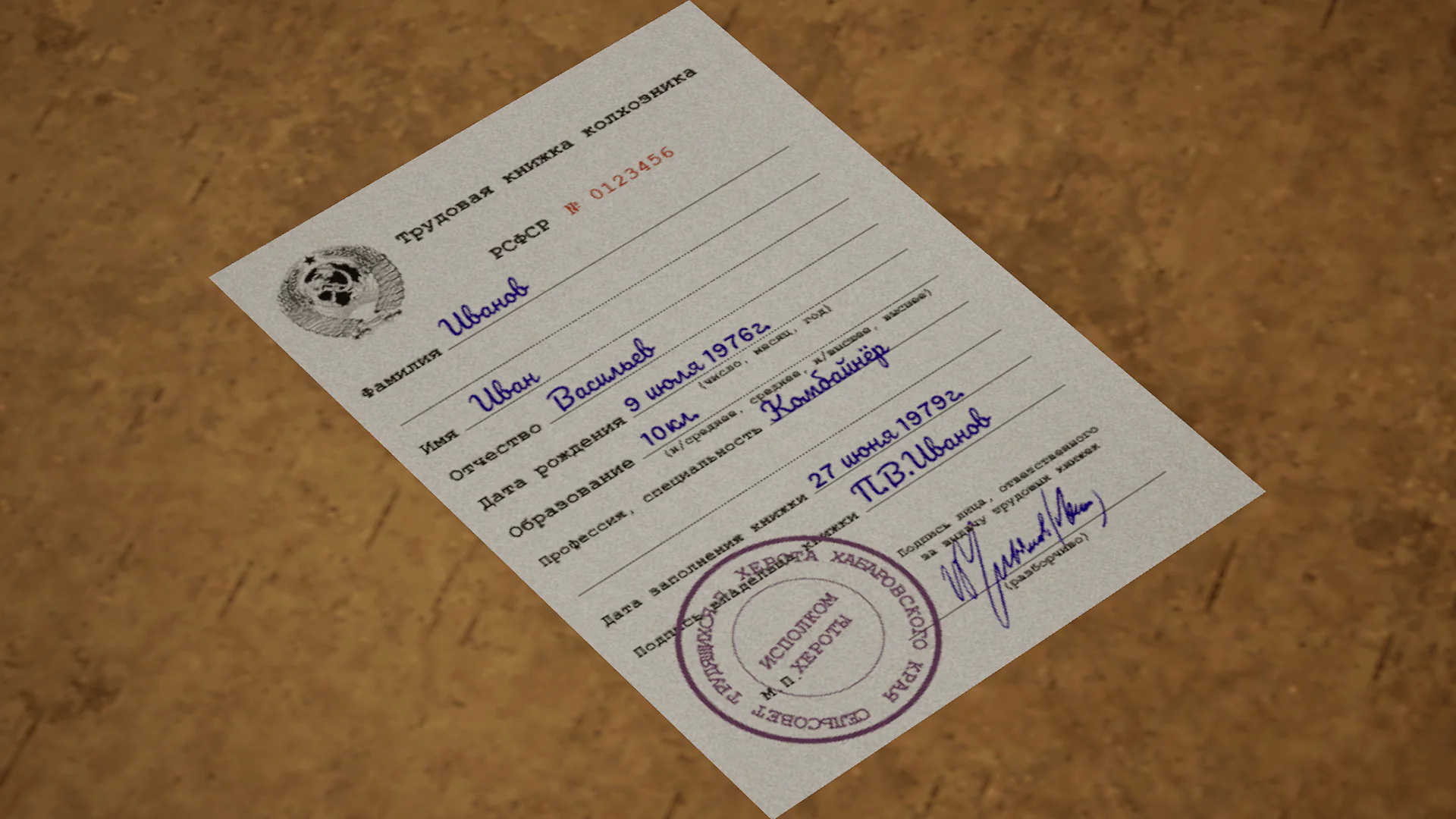
Collective Farmer’s Work Book
If a resident doesn’t have a passport, they’ll most likely identify themselves using a Collective Farmer’s Work Book.
This document primarily recorded workdays on the collective farm while also serving as proof of identity. Unlike a passport, it granted almost no additional rights.
In Herota, this distinction matters.
Ordinary workers, laborers, alcoholics, and most villagers will arrive carrying only their work book, while members of the local elite will present passports instead.
It’s one of many subtle details we use to quietly tell the story of Soviet society without ever having to explain it directly.